DC-coupled PV and BESS metering for settlement, efficiency and compliant project design
The first DC metering solution accredited under CoP11 for co-located solar PV and battery energy storage projects in the UK
We design DC metering for PV and BESS using PM335 PRO, EM235 PRO and DC Sensors for developers, EPCs and asset owners dealing with settlement and compliance.
Utility-scale solar photovoltaic (PV) generation and battery energy storage systems (BESS) both operate on direct current (DC). As project designs evolve toward higher efficiency and better utilisation of grid connections, DC-coupled solar and storage architectures are increasingly attractive.
However, the commercial deployment of DC-coupled systems has historically been constrained by settlement and metering considerations rather than by technology alone. To understand why, it is necessary to first consider the different project topologies used for utility-scale solar and BESS.
This solution is the first DC settlement metering configuration assessed as compliant under Code of Practice 11 for use in solar PV and battery storage settlement in the UK.
The assessment confirms that DC metering can be applied within compliant system designs, rather than being limited to non-settlement monitoring or operational analysis.
For solar PV and battery storage developers, owners and investors, this removes a long-standing barrier to deploying DC-coupled architectures in commercial utility-scale projects.
Project topologies: standalone, AC-coupled and DC-coupled
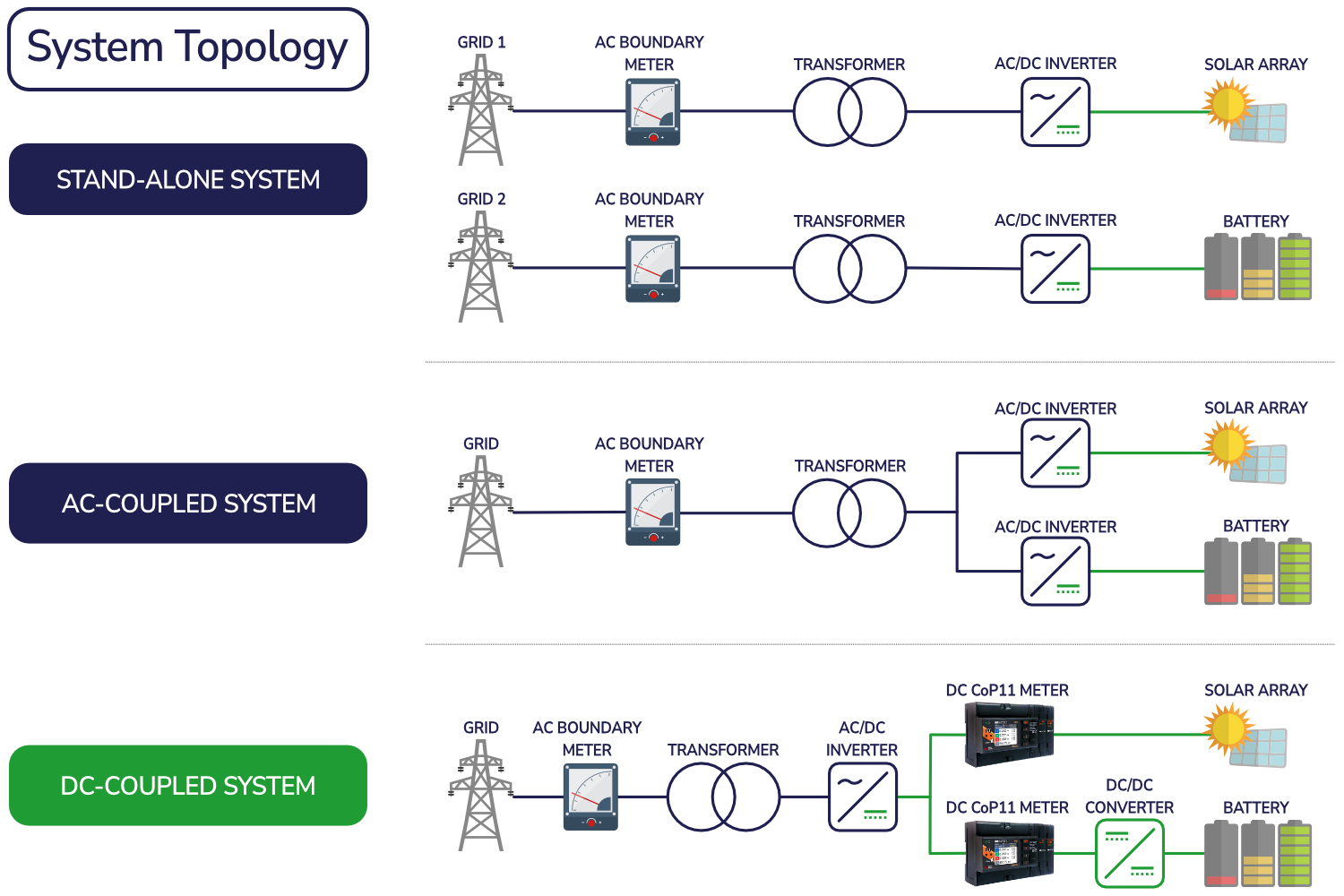
Utility-scale solar PV and battery storage projects are typically developed using one of three architectural approaches, each with distinct implications for energy flows, metering and settlement.
Standalone projects
In standalone configurations, solar PV and battery storage assets have separate grid connections and operate independently. Each asset is settled through its own Balancing Mechanism Unit (BMU), with metering applied at the AC grid connection point of each installation.
AC-coupled co-located projects
In AC-coupled co-located projects, solar PV and BESS share a single grid connection but connect via separate inverters on the AC side. Energy flows between the two assets must pass through DC-AC and AC-DC conversion stages. Metering is typically applied on the AC side, after conversion.
DC-coupled projects
In DC-coupled projects, both the solar array and the battery connect to a common DC bus and share a single grid interface. Energy can flow directly between PV and BESS on the DC side, with DC-AC conversion occurring only once.
This architecture changes where energy should be measured, particularly for settlement purposes.
Why DC-coupled systems require DC-side metering
For settlement under UK market arrangements, solar PV and battery storage are treated as separate assets and must be registered as separate BMUs, even when co-located behind a single grid connection.
In DC-coupled systems, measuring energy solely on the AC side does not reflect the distinct energy flows associated with each BMU. Energy exchanged between the solar array and the battery occurs before DC-AC conversion and the associated conversion losses.
To correctly allocate energy to each asset for settlement, energy must therefore be measured on the DC side, upstream of the inverter. This allows solar generation, battery charging and battery discharge to be identified and accounted for in a way that aligns with the physical operation of the system.

This approach is consistent with National Energy System Operator (NESO) guidance on metering arrangements for DC-coupled co-located solar PV and battery energy storage systems (October 2025), which recognises the need for metering configurations that accurately reflect DC-side energy flows in co-located architectures.
Reference: NESO guidance (October 2025), DC-coupled co-located solar PV and battery energy storage metering
Settlement and revenue: why metering location matters

Revenue frameworks such as Contracts for Difference (CfD) and Power Purchase Agreements (PPA) rely on defined metered energy values. In addition, DC-coupled solar and battery projects may derive revenue from Capacity Market payments, battery arbitrage in wholesale markets, frequency response contracts, participation in the Balancing Mechanism, and Renewable Energy Guarantees of Origin (REGOs).
Settlement and revenue allocation are therefore directly linked to the location and configuration of metering equipment.
When energy is measured only after DC-AC conversion, settlement reflects the converted AC output rather than the underlying DC-side generation and storage flows. In DC-coupled projects, this can create a mismatch between how energy is physically generated and stored, and how it is accounted for commercially across different revenue streams.
For example, clear separation of solar export, battery charging energy and battery discharge is relevant not only for CfD and PPA settlement, but also for arbitrage optimisation, Balancing Mechanism participation and performance reporting under ancillary service contracts.
Addressing this requires settlement-aligned DC asset metering that reflects the architecture of the system.
In compliant configurations, DC asset meters operate in conjunction with the boundary point meter. This enables PV and battery energy flows to be measured behind the grid connection, while maintaining settlement compliance at the site boundary for CfD, PPA, Capacity Market, ancillary services and wider BSC requirements.
Historical barrier to DC-coupled deployment
While DC-coupled architectures have long been technically feasible, their deployment at scale was limited by the absence of certified DC metering solutions recognised for settlement.
Under the Balancing and Settlement Code (BSC), earlier Codes of Practice were written around AC metering of active and reactive energy and make no reference to DC meters. As a result, DC-side measurements could not be applied within recognised settlement frameworks.
This lack of settlement-recognised DC metering was one of the principal barriers to the commercial development of DC-coupled solar PV and BESS projects in the UK.
What changed with Code of Practice 11 (CoP11)
Code of Practice 11 (CoP11) introduced a framework under which DC metering can be used for settlement, provided defined technical, accuracy and compliance requirements are met.
This regulatory change transformed DC metering from an internal engineering or monitoring tool into a recognised settlement component. As a result, DC-coupled solar PV and battery storage architectures can now be designed in a way that aligns technical operation with commercial and regulatory requirements
Typical PV and BESS project scenarios
The CoP11-compliant DC asset metering configuration is intended for utility-scale solar PV and battery storage projects based on DC-coupled system architectures.
Typical use cases include:
- Co-located solar PV and battery storage projects with a shared grid connection
- Projects designed to capture DC-side energy flows between PV and BESS
- Schemes aiming to reduce conversion losses and improve overall system efficiency
- Projects requiring accurate separation of solar generation, battery charging and battery discharge for settlement or commercial reporting
Benefits and key considerations
Benefits
- Enables clear separation of solar generation, battery charging and battery discharge in co-located PV and BESS projects
- Supports DC-side settlement metering for DC-coupled architectures in accordance with CoP11
- Captures energy at source, ahead of DC-AC conversion losses
- Improves settlement accuracy, transparency and alignment with actual asset performance
Key considerations
- Applicable to projects using DC-coupled solar PV and battery storage architectures
- The meter must compensate for losses in order to align DC energy measurements with the defined settlement boundary of the project
- Asset metering configuration must comply with all requirements of Code of Practice 11
CoP11-compliant SATEC DC meters and current sensors
The CoP11-compliant DC asset metering configuration is based on SATEC DC meters EM235 and PM335, used in conjunction with approved external DC current sensors.
The complete asset metering configuration — including meters and associated DC current sensors — has undergone Compliance Testing in accordance with Code of Practice 11 (Asset Metering Types 2 and 3), completed BSCP601 Protocol Approval, and has been assessed as compliant for settlement use when applied as DC asset metering equipment.
-
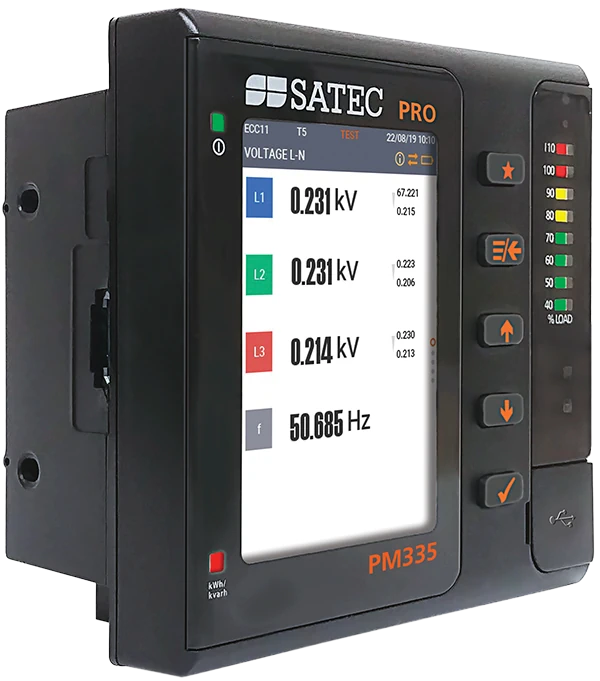
PM335 PRO
Satec PM335 PRO is used for advanced power monitoring applications of both AC and DC current. With waveform recording capabilities and 16GB of storage, it is a powerful Class A, Ed. 3.1 power-quality analyzer and event recorder.
Featuring multiple protocols (IEC 61850, DNP3 and IEC 60870-5-101/104) and dual-port ethernet, this is the ultimate solution for power monitoring, meeting and exceeding the most current requirements in utility and industrial applications.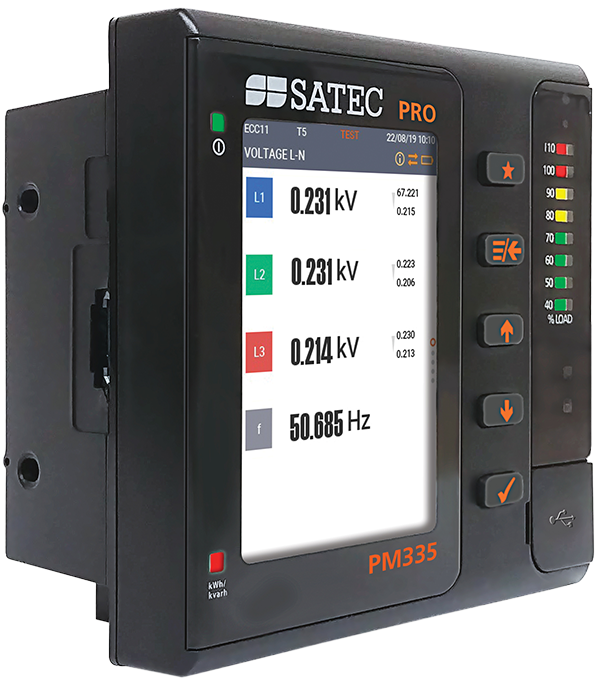
Advanced IEC61850 Multifunction AC/DC Power Meter and Power Quality Analyser
- Class 0.2S accuracy
- IEC 61850 / DNP3
- Power Quality Analyzer: Class A, Ed. 3.1
- DC Metering via Hall Effect Sensors
- Compliance with ENA EREC G99
- Waveform Recording
- 16GB on board memory
-
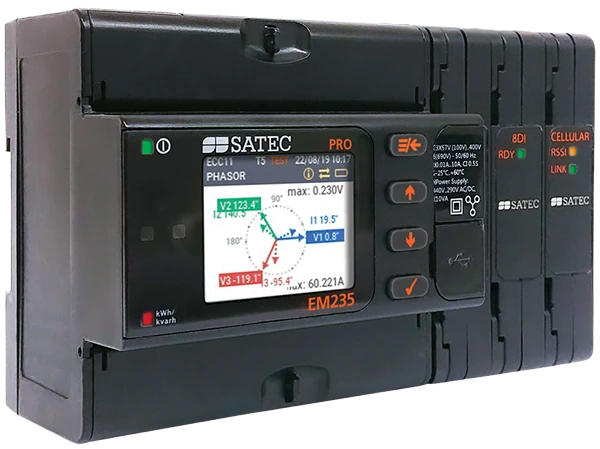
EM235 PRO
Satec EM235 PRO is used for advanced power monitoring applications of both AC and DC current. It is a powerful IEC 61000-4-30 Class A, edition 3.1 compliant power-quality analyzer and event recorder with waveform recording capabilities.
With support for multiple protocols (including IEC 61850, DNP3, and IEC 60870-5-101/104) and dual-port Ethernet connectivity, the EM235 PRO stands as the ultimate choice for power monitoring, meeting the latest requirements in utility and industrial applications.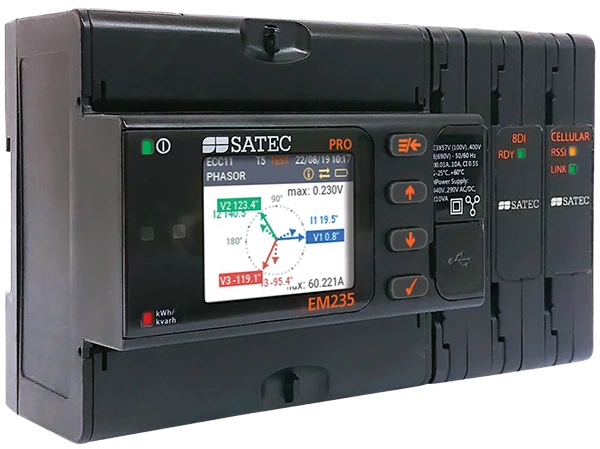
Ultra-compact IEC61850 Multifunction AC/DC Power Meter and Power Quality Analyser
- IEC 61000-4-30 Class A, Edition 3.1
- Class 0.2S accuracy
- IEC 61850 / DNP3 / IEC 60870-5-101/104
- DC Metering via Hall Effect Sensors
- Compliance with ENA EREC G99
- Waveform Recording
- 16GB on board memory
- DIN-rail form factor
-
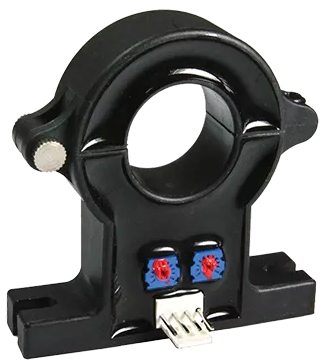
Direct Current Sensors
SATEC Ultra High Accuracy Current Sensors deliver exceptional measurement accuracy across their entire operational bandwidth. This is accomplished by combining multi-point zero-flux technology with a specialized high-frequency ripple sensing channel, enhancing existing DC sensing capabilities.
Hall Effect Current Sensors measure the strength of the magnetic field generated by a current-carrying wire. When paired with SATEC DC power meters, they enable accurate measurements in renewable energy, transportation, power distribution, and other DC applications.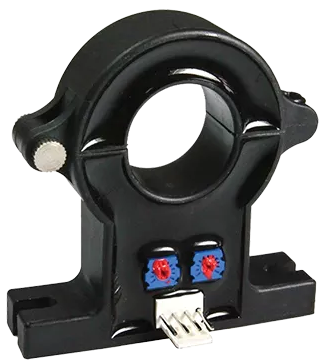
UHACS - Ultra High Accuracy Current sensors
- AC/DC
- Bi-directional
- High accuracy
- Split-core for retrofit
- Wide current measuring range (10-4000A)